
AI Content Generator: Match Blog and Website Capabilities to Business Needs
AI content generators should be evaluated against the distinct needs of each asset: blog drafts require a reader question, evidence, and clear explanation, while website pages need approved business d...


A blog assignment and a website page can look alike on screen, yet they ask an AI content generator for different things. If you manage a small team, face the blank page and read website messaging that sounds like everyone else's, a generator can speed up drafting. Your people still decide what is true, approved and worth publishing.
You have already named your production bottleneck and chosen one measurable outcome. This article turns that diagnosis into a specification you can use. First, we define what blog drafts need: a reader's question, supporting evidence and a clear explanation. Next, we cover website copy, which needs approved positioning, proof, buyer objections and one page-specific action, along with brand voice controls your reviewers can check.
We then turn to free access. Free SEO writing support can assist drafting or revision, but it does not replace your own intent and factual checks, and usage limits and terms decide whether you can test a real workflow. Finally, a capability matrix helps you compare strengths and limits by asset type and sort needs into must-have, useful and unnecessary. We will not name a winning vendor or teach a full blog-writing process. Those requirements then carry directly into weighted tool selection and a controlled implementation pilot, so you know what each asset requires before you compare a single tool.
How an AI content generator fits each content asset
Blog drafts need a reader question, evidence, and explanation
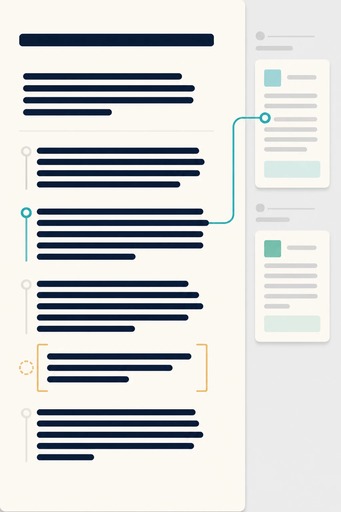
A blog article has one main job. It helps a reader understand or solve a problem tied to your topic. You may call the tool an AI blog generator or an AI blog content generator. The first test is what it lets you tell it. Your brief needs the reader's question and how much they already know. It also needs the scope of the piece and the evidence or approved sources to use. Your team can add its own expertise.
A useful draft is more than fluent text. It explains the issue clearly and uses examples that fit your reader. It flags caveats where the evidence is thin. It follows a structure that suits the question. Some readers ask "what does this process involve?" Others ask "which option should we choose?" Each question needs a different shape.
Assess blog-drafting capability without turning it into a writing tutorial
When you assess blog-drafting capability, ask whether the generator accepts your assignment as written. Can you supply the audience, the evidence and the scope? Can you add the point of view the article should hold?
Separate drafting from verification. A tool may suggest sources or attach citations. Your reviewers must confirm each fact and check each link. They also decide whether the source supports the claim beside it.
Consider a hypothetical draft about a customer problem, such as unclear ownership of security evidence. A strong draft explains the problem and the evidence behind it. It keeps product pitches to a single closing paragraph. Keep your assessment on capabilities and review needs. Detailed outlining and SEO evaluation belong in their own guides.
Match website copy to buyer decisions

Website content needs approved business information
A service or product page helps a prospective buyer assess an offer and decide what to do next. That differs from a blog. A blog may explain a topic in general terms. A page must be accurate about your business. It must lead to an action that fits it, such as booking an assessment or requesting a quote.
When you assess a website content generator for this work, start with what it can accept. You need approved positioning and accurate offer or product details. You also need benefits you can back up and proof such as credentials or case studies. Buyer objections and the intended action belong in the brief too. Without these inputs, a draft fills gaps with generic promises. A fluent paragraph that invents a feature is worse than a blank page.
Keep brand voice and claims under human control
Brand control can be observed. Can your team supply approved examples and keep required terminology? Can it flag prohibited claims and revise the output without starting over? Take a consultancy that offers SOC 2 readiness support. Its page can describe the readiness assessment within the firm's approved scope. It must not promise certification or cite customer outcomes nobody has supplied.
The service or product owner verifies every claim, proof point, availability detail, and the accuracy of the offer. SynthSeo's website-based brand learning can inform tone and vocabulary. The draft then starts in a voice that sounds like you. Your people still edit, refine, or regenerate the copy, and they approve it before publication.
Check free SEO writing access and editorial controls
Separate drafting help from SEO and fact-checking
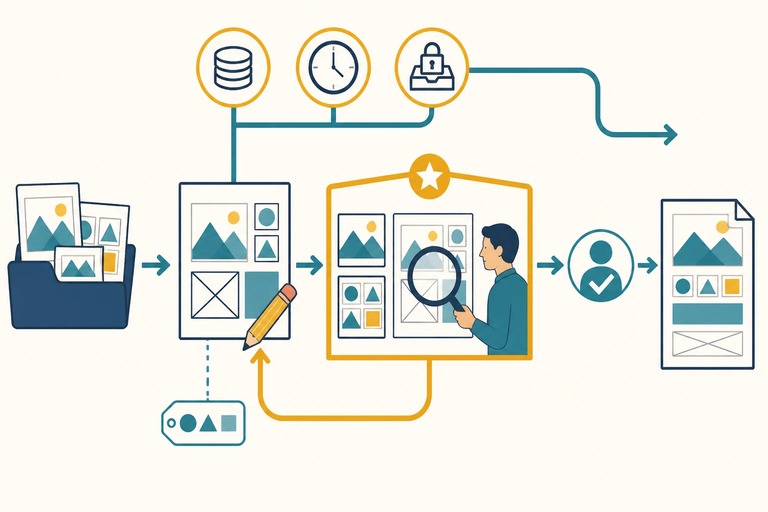
Free SEO content writing software can help you draft or revise. That matters when the blank page is your bottleneck. It cannot show that a draft matches search intent, meaning the reason someone searched. It cannot show that its claims are true. The same caution applies to any SEO content generator free of charge. Keyword suggestions, headings and metadata help your workflow, but they do not prove search performance or quality. Google's guidance asks for helpful, reliable content. The use of AI alone does not tell you whether a page meets that standard.
Test access, export, and terms in the actual workflow
A continuing free plan and a trial are different offers. So are limited credits and a free feature inside a paid product. Name which one you are testing. Read the current privacy, retention and business-use terms yourself. Do not infer model-training practices from a general privacy statement. An interface test does not replace contract review or your sensitive-data policy. Complete the table only after testing.
| Plan tested | Account type and region | Usage limits | Export | Retained inputs | Permitted business use | Verification date |
|---|---|---|---|---|---|---|
| Vendor A | Record after testing | Not tested | Not tested | Not tested | Not tested | Not tested |
| Vendor B | Record after testing | Not tested | Not tested | Not tested | Not tested | Not tested |
Make editorial review part of the free-plan test
Run the free test on a real brief. Check whether the workflow keeps the brief and source context through each revision. Note whether you must paste them in again. Ask a reviewer to inspect factual accuracy, unsupported claims and brand terminology. Ask how much effort it takes to reach publishable quality. A search for a content AI writer free is an access query. It does not promise unrestricted commercial use or export. The tool may speed repetitive drafting, and your people stay accountable for approval and publication.
Turn asset needs into a capability shortlist

Compare strengths and limits by asset type
You have now tested free access and editorial controls. Use this matrix to set requirements before you rank any vendor. A capability that solves one asset's bottleneck may do nothing for another's.
| Asset | Key inputs | Human check |
|---|---|---|
| Blog draft | Reader question, evidence, structure | Facts, sources, originality |
| Service page | Positioning, proof, objections, action | Offer scope, claims, audience fit |
| Product page | Approved product data, variants | Specifications, claims, availability |
Translate the diagnosis into must-have, useful, and unnecessary capabilities
Start with the production outcome you chose earlier, then sort capabilities against it.
- Must-have: asset-specific briefing, human editing, a way to find and correct unsupported claims, and acceptable business-use and privacy terms.
- Useful: approved examples or references, repeatable brand instructions, practical export, revision history, and collaboration when several people review.
- Unnecessary for an initial check: unrelated templates, maximum word allowances, bulk generation without a quality-control need, and unverified promises of rankings or conversion gains.
Choose each capability because it serves your outcome.
Carry requirements into the next decision
Take two real assets, such as a blog draft and a service page. Mark where the matrix shows a gap in your current workflow. Those gaps become the criteria you weight when you compare shortlisted tools. Detailed SEO-specific evaluation is a separate decision, so leave it for the next round.
Run a bounded pilot. Test one approved brief, record how long review takes, and score accuracy, specificity, brand fit and editorial burden. Output volume alone does not show success. Ask whether the workflow improves your chosen outcome without weakening review.
Choose an AI Content Generator by Asset

The strongest AI content generator for your team is the one whose limits you understand before the first draft. A tool that writes fluent text still needs your people to confirm facts, approve claims and protect your brand voice. That review, not the volume of output, decides whether a draft is ready for its job.
Take one real blog assignment and one real website page. Hold each against the capability matrix in this article, and mark where your current workflow lacks the inputs or human checks that asset needs. Those gaps show which requirements matter most for your production goal, whether that is faster drafts, sharper website messaging or fewer revision rounds.
Then request a requirements-focused implementation review of those gaps. We will help you scope the inputs, review controls and a bounded pilot. If you are already comparing shortlisted tools, carry the same gaps into your purchasing scorecard as weighted criteria.