
Brand Voice Guide Template: Build a Usable Playbook for Your Team
A usable brand voice guide turns audit findings into concise, actionable rules for writers, covering audience, positioning, observable attributes, vocabulary, prohibited phrasing, tone scenarios, exam...


You have completed the audit, drafted your voice attributes, and listed the tone scenarios and stakeholders that matter. A brand voice guide template is the next step: it turns those findings into one document your team can use. Without it, a writer still has to ask which word to use for a feature, and a reviewer still has to ask who can approve a bolder headline.
Guides usually fail in one of two ways. Some grow so long that writers avoid them. Others stay so vague that "confident" or "warm" means something different to each reader. Both leave audit learning unadopted and ownership unclear.
This article is written for agency content operations managers, SaaS marketing leads, and professional-services brand managers who are responsible for implementation and already know brand personality basics. It gives you the ten essential fields in a table you can copy and adapt, with entry guidance and an example for each. You will then define context-specific tone, using a scenario row for situations such as a service outage. A compact sample shows how to write attributes as observable behaviors a writer can check. Finally, you will assign approval authority, exceptions, and review dates, then test the guide with a writer who did not create it. Everything appears on the page, with no form or gate.
Start small. Settle your audience, three observable attributes, and one approval owner before adding more rules. Then let a second writer use them, and watch where they hesitate. The next section starts with the essential fields and the order for completing them.
Complete the Essential Fields First
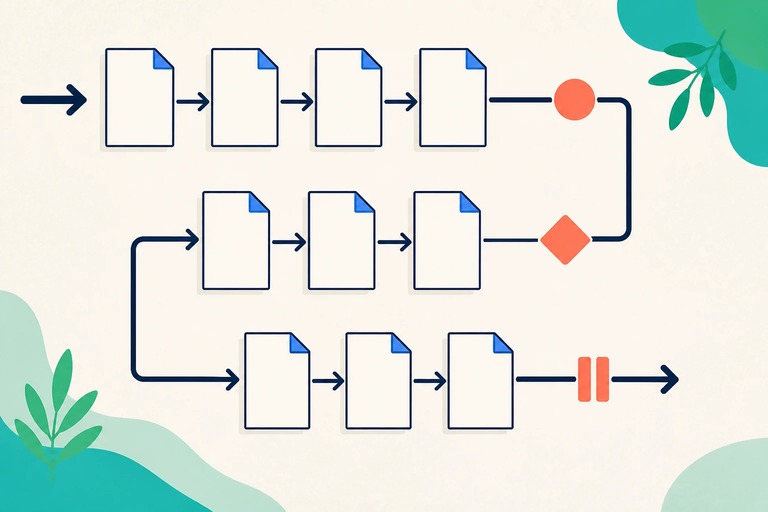
Set the minimum scope for a usable brand voice guide template
Your first version should cover the writing decisions that come up most and carry the most risk. Let your audit pick the fields. If writers dispute product terms, vocabulary comes first. If approvals stall, the escalation owner does.
A brand voice guide template needs ten fields. They are audience, positioning, attributes, vocabulary, and prohibited phrasing. The rest are tone scenarios, approved examples, escalation owner, version, and review date. Attributes are the stable part. Give audience, vocabulary, examples, and governance their own fields, because they change more often.
| Field | Purpose | Entry guidance | Example | Owner | Approval state |
|---|---|---|---|---|---|
| Audience | Names the reader | Priority reader and situation | New admins setting up a workspace | Marketing lead | Approved |
| Positioning | Anchors voice to value | Problem plus differentiated value | Coordinate work without extra process | Brand manager | Approved |
| Attributes | Define stable behavior | Behavior with the adjective | Clear: state the action early | Brand manager | Approved |
| Vocabulary | Keeps wording consistent | Preferred terms, with context | Use "workspace," not "portal" | Product marketing | In review |
| Prohibited phrasing | Sets boundaries | What to avoid, and why | No unsubstantiated guarantees | Legal reviewer | Approved |
| Tone scenarios | Shows context shifts | Situation plus adjustment | Outage: direct, acknowledge impact | Support lead | Approved |
| Approved examples | Shows rules in use | Context, text, rationale | "Next update by 14:00 UTC." | Channel owner | Approved |
| Escalation owner | Resolves sensitive cases | Role, contact path, trigger | Legal for regulated claims | Brand manager | Approved |
| Version | Identifies the current guide | One naming convention | 1.2 | Document owner | Approved |
| Review date | Prevents drift | A date or a trigger | Six months | Document owner | Scheduled |
Keep completion manageable and connected to the work
Mark each field as required or optional. These ten are required. Channel notes and localization guidance can wait until writers ask for them. A short guide is easier to scan and maintain.
Fill the fields with material you already have: audit findings, draft attributes, tone scenarios, and approved samples. Writers should not have to interpret those source documents themselves.
The guide records decisions your team has agreed. Missing evidence, strategy disputes, and unclear legal policy need resolving before the guide can record the outcome.
Keep the canonical version where contributors work, and link to it from briefs, onboarding, and content request forms.
Define Contextual Tone Fields

Use brand tone guidelines to adapt a stable voice to the situation
Tone fields add context to the essential fields. Voice is the relatively stable character of your communications. Tone is how that character adjusts for an audience, channel, or circumstance. Your brand tone guidelines turn tone decisions you already make into instructions. A writer can apply them to a real task.
Start with situations your audit surfaced, or those that carry greater customer, legal, or operational risk. Give each one a row:
| Scenario | Communication goal | Tone adjustment | Recommended behavior | Escalation trigger |
|---|---|---|---|---|
| Service outage | Explain the impact and the next step | Direct, calm, non-blaming | State verified facts first | Security or legal obligations may apply |
Add rows only when writers keep asking the same question.
Make each scenario specific enough to guide a decision
A scenario works when a writer can draft from it without asking for help. For an outage, the row should tell writers to state verified facts. It should also tell them to acknowledge the impact and give the next update time. Routine content differs. A product announcement can be energetic when the claims are supported. A billing issue calls for precise, restrained language because the reader is worried about money.
Tone dimensions help your team discuss these differences. Examples are formal to casual and enthusiastic to matter-of-fact. Use them as discussion aids only. "Matter-of-fact, never playful" gives a writer more direction than "friendly."
Priority also needs to be explicit. Required disclosures, accuracy, and approved policy language outrank stylistic preference. Say so in the guide. Name an escalation owner for scenarios where a writer might soften a required statement for tone.
Show a Compact Completed Sample

Present examples of tone of voice guidelines in use
This illustrative sample to adapt is an invented example, so it carries no customer result. Its audience is new administrators setting up their first team workspace. Your own entries should come from your audience research and approved product facts.
The sample defines three attributes as observable behaviors:
- Clear: State the action early.
- Capable: Explain verified next steps.
- Considerate: Acknowledge disruption without empty reassurance.
The attributes apply to a service interruption. The context example reads: "We're investigating the interruption. We'll post the next update by 14:00 UTC." The first sentence names the disruption. It also names the action under way. The second gives a specific time. An administrator knows when to check again and need not keep refreshing the page.
Explain how a sample makes abstract rules testable
A sample turns an attribute into something you can test. A writer can read the interruption message and ask whether each sentence matches an attribute. Here, the message states a verified action and sets a clear expectation, so it meets Clear and Capable. It also acknowledges the disruption without promising an outcome, which meets Considerate.
A counterexample shows the difference: "Everything will be fine soon." It offers unsupported reassurance. It gives the administrator no useful next step. Nobody can verify it, and it says nothing about when to look for news.
Ask writers to compare the sample with your existing approved copy. If product facts, audience needs, or policy differ, they should revise it before use. Refresh the sample whenever product names, workflows, or approved claims change. This keeps it from teaching a retired rule.
Assign Decision Rights and Test Adoption

Make approval, exceptions, and maintenance explicit
The sample above only helps if someone owns it. Separate five responsibilities, even when one person holds several. The guide owner maintains the document. The routine approver signs off on everyday examples. The specialist reviewer, such as legal, checks regulated claims. The writer drafts within the rules, and the publisher releases only approved copy.
Each decision also needs an owner. The routine approver handles examples and terminology changes. The specialist reviewer handles regulated or legal claims. The guide owner, or a named delegate, handles exceptions to voice guidance. Record each document's status as Draft, In review, Approved, or Retired. Add the owner, version, effective date, and review date.
A named escalation route reduces uncertainty without sending every writing choice to the most senior approver. A writer who doubts a headline asks the routine approver. A writer who doubts a refund promise goes to the specialist reviewer, and the guide says so.
Test the guide with people who did not write it
Give a short content brief to a writer or editor outside the drafting group. Ask them to create or revise a piece of copy using only the guide. One example is a service update for new administrators.
Check three things. Can they find the relevant rule quickly? Do they interpret the attributes the way you intended? Do they know when approval is needed? Record unclear rules, conflicting interpretations, and repeated questions, and revise the guide before wider rollout. This is a qualitative check and does not prove the guide works for every writer.
Publish the approved version in one canonical location once the questions are resolved. Link it from writing briefs, request forms, and contributor onboarding. Set the review date according to organizational change and risk, since no single interval suits every team. Pair that date with a trigger, such as a major positioning change.
Put Your Brand Voice Guide Template to Work
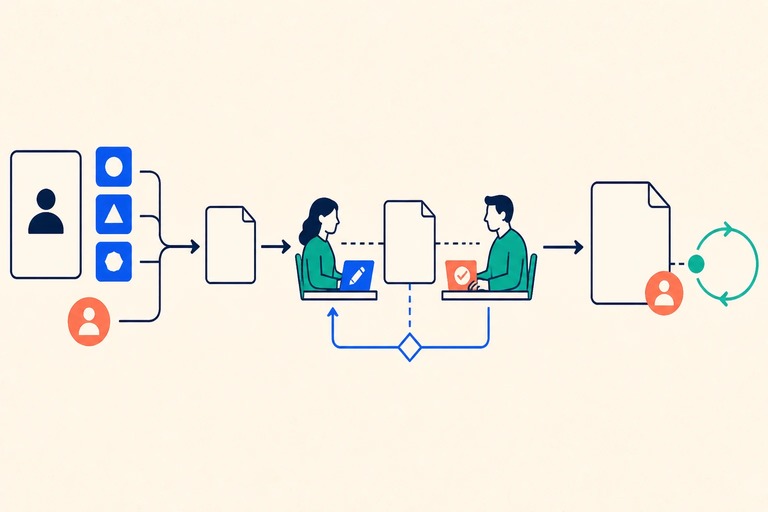
A guide earns its place when a writer can use it without asking you what a word means. That is why ownership, approval states, and review dates sit beside the attributes instead of in a separate memo. Keep the first version small, and let the hesitation of a second writer tell you which rule to sharpen next.
Aim for fewer unresolved interpretation questions, not a promised saving. Once the guide holds up, exception testing and operational rollout become the natural next steps, because they depend on rules that people already read the same way.
Start today with the essential fields from the table in this article. Enter your audience, three observable attributes, and one approval owner, then add the tone scenarios your team meets most often. Next, arrange an implementation session with us. Bring one writer and one approver, and we will test the playbook together, so you see where it holds and where it needs work. If your team handles high-risk customer communications, bring a sensitive message and stress-test it against your voice and approval rules.