
Brand Voice Guidelines Examples: Annotated Rules and Before-and-After Copy
Effective brand voice guidelines connect each edit to a reader need, a stable voice rule, and a tone suited to the situation. Annotated examples show how this approach turns SaaS onboarding into clear...
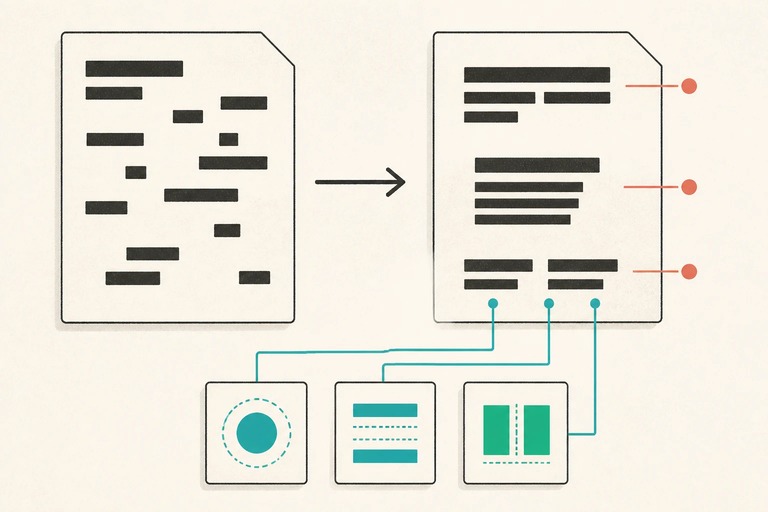

Two reviewers can agree that a draft feels off and still recommend different edits. One trims the enthusiasm; the other adds a benefit. The writer is left guessing which change reflects the brand. These brand voice guidelines examples close that gap by showing the reasoning behind each revision, not only the polished result.
We assume you already know your basic voice attributes and have worked with a tone matrix. From there, this article gives you an annotated library of three before-and-after passages from SaaS, e-commerce, and professional services. Each one links an audience need to a stable voice rule and a context-specific tone decision, so you can trace why the copy changed. Before you read each annotation, try naming the rule behind the edit yourself.
A polished sentence shows an outcome, but it cannot show how to repeat that outcome in a new channel, for a new audience, or under a different constraint. Without a documented rationale, edits become untraceable and rules get interpreted inconsistently. Rule-to-copy traceability fixes this by letting any reviewer connect a change to a written rule and the reader need behind it.
We also separate voice edits from factual and structural corrections, because a claim that reads well still needs verification. Near the end, you will find a simple independent revision test that shows whether two reviewers applying the same rule reach similar edits. The cases are illustrative, not customer results, and each fits only its own context.
We start with the foundation: defining the reader's task, separating a stable voice rule from a situational tone choice, and giving every rule an ID. With those pieces in place, each example explains a decision instead of just displaying copy, and you can test your own drafts against it.
Make Each Brand Voice Example Explain a Decision
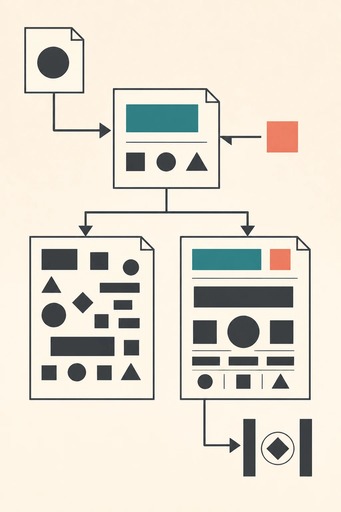
Start with the reader's task
Every example begins before the edit, with the reader's task. Define the audience need as what the reader must understand, feel, or do in that specific moment. A new user needs to know how to begin. A shopper needs to know what is reduced and when the offer ends. Before you change a word, name the audience, the channel, the task, and any product or legal limits. ISO 24495-1:2023 is the international plain-language standard. It centers on readers being able to find, understand, and use information. That gives you a test beyond personal taste.
Link the need to a stable rule and a situational tone
Brand voice is the relatively consistent way a brand expresses itself. Tone is how that voice adjusts to context. Keep them separate in your notes. "Lead with the next action" can be a stable rule that holds in onboarding, support, and email. "Use a calm, matter-of-fact tone" is a decision for one situation, such as a failed payment. In brand voice and tone guidelines, the workflow runs in order. Take the attributes and writing boundaries from the voice guide, then choose the tone the situation calls for. The rule stays fixed while the tone moves.
Make the reasoning traceable
Rule-to-copy traceability means a reviewer can connect each meaningful change to a written rule. The reviewer can also name the reader need behind it. Give every rule an ID, such as "V1: Lead with the reader's next action." Feedback can then say "apply V1." That gives the writer a rule to act on. Each of the brand voice guidelines examples that follow uses the same annotation model:
- Audience need: what the reader must understand or do.
- Stable voice rule: the principle that applies across contexts.
- Context and tone decision: what changes because of the moment.
- Revision: what changed in the copy.
- Reviewer check: the fact, claim, or product detail to verify.
Factual questions get their own check, so a voice edit never slips in a new claim.
See Brand Voice and Tone Guidelines Applied in Three Contexts

SaaS onboarding: replace an abstract benefit with an action
We can now apply the annotation model to three contexts. This SaaS case is an illustrative example, not a documented customer case or performance result.
| Element | Annotation |
|---|---|
| Before | "Unlock unparalleled productivity." |
| After | "Create your first project and invite your team." |
| Audience need | Know how to begin. |
| Stable rule | V1: Prefer concrete actions over inflated benefits. |
| Tone decision | Direct and action-oriented, because this is onboarding. |
| Reviewer check | Confirm users can create a project and invite teammates at this point in the product. |
The original line asks a new user to admire a benefit. Someone opening an empty workspace needs a first step. The revision names two actions in order. The word "unparalleled" disappears because the rule favors verbs over claims that are hard to support.
The tone decision is narrow. The brand's voice is the same as in a launch announcement. Onboarding is a task, so the tone turns direct. The reviewer check matters because the rewrite promises a path the product must actually offer.
E-commerce promotion: make the offer clear without pressure
This is an illustrative example. The copy and offer do not belong to any real retailer.
| Element | Annotation |
|---|---|
| Before | "You would be crazy to miss this." |
| After | "Selected items are reduced through Friday." |
| Audience need | Understand what is discounted and when the offer ends. |
| Stable rule | V2: Avoid judgmental pressure and state offer details plainly. |
| Tone decision | Promotional but factual. |
| Reviewer check | Use the revised line only if the selection, reduction, and Friday end date are verified for the actual message. |
The original sentence tells shoppers how to feel and says nothing about the offer. The revision answers the two questions a shopper actually has: which items, and until when. Promotional copy can stay energetic. The energy should come from clear details, with no implied criticism of the reader.
A line that sounds accurate may still be wrong. If the sale ends Sunday, or only some categories qualify, the rewrite is wrong, however calm it reads.
Professional services: describe the process without promising an outcome
This is an illustrative example, not evidence of client results.
| Element | Annotation |
|---|---|
| Before | "We guarantee transformation." |
| After | "We assess the current process and recommend improvements based on the findings." |
| Audience need | Understand what the service does. |
| Stable rule | V3: Describe the process and avoid unsupported guarantees. |
| Tone decision | Precise and measured, as in a proposal or service description. |
| Reviewer check | Confirm the assessment and recommendation process matches the real service and contract. |
A buyer reading a proposal wants to know what happens after signing. "Transformation" gives no answer. "Guarantee" promises a result that may depend on circumstances the firm does not control. The revision describes two activities, assessing and recommending, and ties the recommendations to findings.
The tone moves toward restraint because proposals are read closely and sometimes become part of a contract. A legal or delivery lead should confirm that the described process is the one the firm actually performs.
Separate Voice Edits from Factual and Structural Corrections

Identify what kind of change the draft needs
Before you rewrite a line, name the kind of change it needs. A voice or tone edit changes the manner of expression and preserves the intended meaning. A factual or substantiation correction checks claims, product details, dates, discounts, capabilities, or guarantees. A structural or usability correction changes order or adds a missing step. It can also fill an information gap the reader needs to finish a task.
The e-commerce example shows why the labels matter. "Selected items are reduced through Friday" sounds plain and accurate, and the voice edit is sound. But the sentence now makes three claims: which items, how much, and when the offer ends. If the real message has a different end date or selection, the rewrite is wrong. It stays wrong however clean it reads. Treat the voice edit as finished and the offer as unverified until someone confirms it.
Keep reviews explainable and claims grounded
When you give voice feedback, cite the rule. "Apply the rule to avoid judgmental pressure" gives a writer something to act on. "This doesn't sound right" invites a debate about taste.
Send product and service claims to the right subject-matter or legal reviewer. A factual question needs a verified answer, and the nicer sentence cannot supply one. During a voice edit, keep the meaning intact. Mark unresolved facts or interface details in the draft so nobody mistakes them for approved copy.
The FTC states that advertising claims must be truthful and not misleading. It also says advertisers need a reasonable basis for objective claims before they publish them. Clear writing does not meet that standard on its own. It also does not replace legal, accessibility, or product review.
Test Whether a Rule Travels Beyond One Example

Run an independent revision test
After you separate voice edits from factual fixes, test whether the voice rule holds up. A rule is only useful if two people can apply it and reach the same decision. Pick a real draft, with permission, and remove sensitive details. Write down its audience, channel, task, and constraints so reviewers start from the same facts.
Then ask at least two reviewers to apply the same rule on their own. They should not see each other's edits. Compare their reasoning as well as their wording. You are looking for shared interpretation, and the sentences themselves can differ.
If reviewers diverge because the rule is vague, rewrite it. Add context or an exception, then test again with a fresh pair of eyes if you can. Note which rule version each reviewer used.
Keep examples honest and useful over time
Examples age, and they can mislead if readers cannot tell what is real. Mark every fictional scenario with a plain label such as "illustrative example." Real examples need a named source. Never present an invented customer quote, outcome, or performance claim as evidence.
When a rule is meant to apply broadly, test it in more than one context. Examples include onboarding, a promotion, and a proposal. Add exceptions for sensitive or high-stakes situations, like billing problems or service interruptions.
Record the rule version, reviewer roles, edits, rationales, and final decision. Future reviewers can then follow the reasoning without guessing at it. Treat the exercise as qualitative calibration. It is a small internal check and does not prove conversion impact.
Make Brand Voice Guidelines Examples Repeatable

The last useful point is about the edits you cannot explain. When you read a draft against the SaaS, e-commerce, and professional-services cases, every change you want to make either maps to a written rule or it does not. The ones that do not are your most valuable finding. Each is either a rule your team already uses but never wrote down, or a personal preference that should not decide approved copy. Either way, the gap is now visible and fixable.
Start with one real draft, with permission and sensitive details removed. Name the audience, channel, and task. Mark each edit you would make, then write the rule ID and reader need beside it. Keep a separate list for facts that still need a subject-matter or legal reviewer.
Once tested rules hold up under independent review, the playbook resource is where you formalize them as approved examples. Before that, arrange an implementation session with us and bring the edits that have no approved rule behind them. We will help your reviewers settle on the rules they already apply, so the next revision follows shared reasoning instead of taste.