
SEO Content Writing Tools: Evaluate Search Intent, Coverage and Editing Support
SEO content writing tools should be judged by how well they help answer a reader’s actual search question, not by optimization scores or keyword counts. The guide separates research, briefing, draftin...


A draft arrives in an afternoon, reads cleanly, and repeats your target phrase, yet it answers a different question from the one your reader typed into search. If you lead content or run search engine optimization (SEO) for clients, you know the pattern: efficient drafts that miss the search need. SEO is the practice of making pages easier to find for the questions people actually ask. This guide shows how to evaluate seo content writing tools by testing whether they improve that answer rather than simply adding keyword coverage.
A tool label or optimization score cannot settle that question. An optimization score is a number the product assigns to show how closely a draft matches the product's own model. It does not show that the draft fits intent, covers the right questions, or supports its claims. So we judge tools by observable search-alignment failures, such as a missing answer, an irrelevant section, or an unsupported claim.
The article follows the order of a real evaluation. First, you separate research, briefing, generation, optimization, and editorial approval as distinct functions, with generation as one component of your SEO writing stack. Next, you validate search intent using current results and audience knowledge rather than a tool's label. Then you evaluate useful coverage, source support, and whether each revision is meaningful. Finally, you carry your general purchasing scorecard into a search-specific pilot that tests outcomes such as fewer irrelevant sections and fewer substantive revisions. We do not promise rankings.
You need basic search-intent knowledge, a target audience question, and an existing draft or approved brief. Writers and editors stay in control of what remains in the draft throughout. We begin where a failed draft begins: by naming the job that went wrong, because you can only judge a tool against the function it performs.
Separate the SEO Writing Functions Before You Compare Tools

Distinguish research, briefing, optimization, and editorial approval
When a draft misses its search need, name the job that failed. Research finds queries and audience questions. Briefing turns that task into scope, evidence needs, and acceptance criteria. Optimization surfaces possible gaps or issues, but people decide which suggestions belong in the article. Editorial approval stays with people, who check accuracy, clarity, brand fit, and readiness to publish. One platform may combine several of these functions, but that does not make every feature equally reliable. Test each function on its own, using the same draft.
Use an AI article generator as one part of the workflow
An AI article generator belongs in the drafting step of your SEO writing stack. It produces a draft, while research and editorial judgment stay with your team. A blog writing generator gives writers a first version to react to. That helps them move past the blank page. Generated material still needs verification and revision, so writers review, edit, and approve every passage. At SynthSeo, we design for that model: you edit, refine, or regenerate, and you stay in control. The detailed steps from brief to draft belong in the next article in this series.
Check whether the workflow fits your team
Ask whether the tool fits how your team already works. Check that it handles your existing briefs and documents. It should also support your collaboration habits and connect to your publishing system. Then name the reviewers. Editors judge clarity, SEO specialists judge search alignment, subject-matter reviewers validate claims, and marketing approvers check positioning. Each person needs to see and act on the recommendations that touch their work. Judge each feature by the failure it may help fix. Examples are an unanswered reader question or an unsupported claim. A longer feature list does not reduce rework if nobody can use it.
Validate Search Intent With Current Results and Audience Knowledge
Write the intended search task in plain language
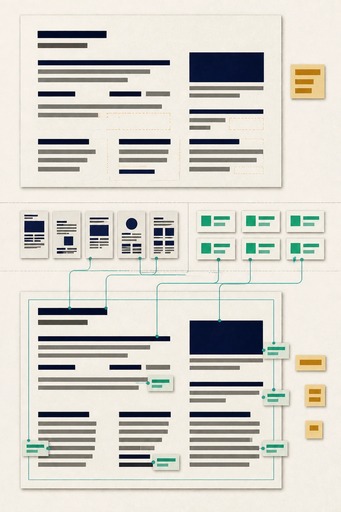
Start with the task the page must serve. Write it as one plain question. State what the reader is trying to accomplish. Name the decision this article should help them make. Our working example is: "How do I compare SEO content writing tools by the quality of support they give for search alignment, beyond the score?" Then set the scope. The page covers intent checks, coverage, evidence, and revision value. It excludes a ranked "best tool" list and general AI writing advice. Treat the intent label from any AI SEO content writing tool as a hypothesis. It is a starting guess to test.
Compare the tool's interpretation with observable evidence
Check the tool's reading of the query against what you can see. Review the current results for your target query. Record the result types, the recurring formats, and the reader need each page seems to serve. Note the market, language, device, and date, because results vary and change. Then compare those notes with audience knowledge. This includes customer questions, support requests, and relevant Search Console queries. Search Console queries show the searches that already bring people to your site. Keep observed findings separate from tool suggestions. Several comparison pages built around use cases is a finding. "Add a use-case section" is a suggestion. It belongs in the draft only if it supports the intended task and you can justify it.
Turn intent into an annotated brief and acceptance criteria
Capture the verified intent in a short brief.
- Audience: a content lead choosing writing support.
- Search need: compare tools by how well they support search alignment.
- Expected answer: a method covering intent, coverage, evidence, and revision value.
- Supporting evidence: current vendor documentation and Google Search Central guidance.
- Exclusions: unsupported ranking claims and generic AI writing tips.
- Review owners: SEO for intent and SERP interpretation, the editor for clarity, the subject-matter reviewer for factual validation, and the approver for positioning.
One criterion might read: "The comparison explains the buyer's decision and supports material claims with verifiable sources." Use this brief to test whether an AI content generator SEO workflow helps answer the question.
Test Coverage, Evidence, and the Value of Each Revision

Judge useful coverage instead of more keywords or longer drafts
Coverage means the draft answers the reader questions that matter. It also explains the subtopics the page's purpose requires, however many words or terms that takes. When a tool suggests a new section, ask three questions. Does it meet a real reader need? Does it sit inside the brief's scope? Does it add explanation or evidence? Reject additions that pad the article, repeat an adjacent idea, or exist only to raise a score. A text generator SEO report may list terms that competing pages use. Treat that list as a prompt for review. A term in your draft does not show the draft is relevant.
Verify sources and claims before accepting suggestions
Check every factual claim against a primary or authoritative source before you accept a suggestion. Treat generated citations as leads. A reviewer must open the source and confirm it says what the draft claims. Label each input by type: official guidance, observed SERP finding, vendor claim, controlled test result, or editorial inference. Google's people-first content guidance sets out quality principles. It does not endorse commercial tools, and it does not describe a tool score as a ranking signal. Search-volume and difficulty figures are provider estimates. They cannot guarantee demand or traffic, so use them to prioritize questions.
Test whether revisions improve the answer
Compare each revision with the original. Here is a keyword-repeating paragraph: "SEO content writing tools help with SEO content. The best SEO content tools optimize SEO content for SEO." The revision: "Choose a tool by testing whether it helps your team answer the reader's actual question. Check that the brief names the buyer's decision and the evidence each claim needs. Google's people-first guidance asks creators to prioritize helpful, satisfying content. An optimization score alone does not show a draft meets that standard."
Ask whether each change improves intent fit, accuracy, clarity, completeness, or evidence. Record whether you accepted, adapted, or rejected the suggestion, and why. Count substantive rework separately from stylistic edits. That split shows which suggestions waste editing time.
Run a Search-Specific Pilot and Measure What Changes

Extend the general purchasing scorecard with search-specific criteria
Keep the criteria your team already uses, such as usability, integrations, governance and price. Then add four search-specific rows, and ask reviewers to record evidence for every rating. An impression is not enough. Set the weights to match your organization's risks. A vendor's overall rating is not independent proof.
| Added criterion | Evidence to record |
|---|---|
| Intent validation | Results reviewed, date, market, intent statement |
| Useful coverage | Gaps found, accepted or rejected |
| Source support | Claims checked against primary sources |
| Revision quality | Substantive versus stylistic edits |
Test one representative draft or brief
Freeze the audience, query, approved brief, required sections and out-of-scope topics before anyone opens a tool. Then capture a baseline: time spent, missing or irrelevant content, source support and substantive revisions. Give each tool one defined job, such as identifying coverage gaps. This keeps it from rewriting everything at once. For a small pilot, run several comparable pieces so one unusual draft cannot decide the result. Writers and editors should assess every piece against the same criteria. We suggest holding SynthSeo to that same test, with your people deciding what to edit, refine or regenerate.
Set workflow outcomes without promising rankings
Track intent fit, relevant coverage, irrelevant sections, verified claims, substantive revisions, editing time and reviewer judgment. Set success thresholds before the pilot starts. For example, you might seek better coverage without more out-of-scope material or longer fact-checking. A small pilot can inform workflow decisions. It cannot show that a tool caused ranking or traffic changes. After publication, treat Search Console data as a monitoring signal. Account for competition, seasonality, site changes and shifts in the results.
Choose SEO Content Writing Tools by the Answer They Improve

The most useful habit to keep is to treat every suggestion, score, and generated paragraph as evidence for your reviewers to weigh, not as a verdict. When a tool surfaces a gap, your SEO specialist checks it against current results, your subject-matter reviewer checks the claims, and your editor decides whether the change stays. That keeps people in control and keeps the focus on the reader's question, not the score.
Choose one existing draft this week. Write the reader's search question in one plain sentence, set the approved brief beside the draft, and mark where they diverge: a missing answer, an irrelevant section, or an unsupported claim. Then run an intent-focused trial on that draft with SynthSeo, where you edit, refine, or regenerate each passage and record which revisions were substantive.
Afterward, request an implementation session with us. We will review the brief, the revisions, and the evidence gaps that remain. If you are not ready for a trial, apply the brief criteria from this article to that draft first, then carry the criteria your reviewers accept into your brief-to-draft production workflow, the topic of our next article.